
Oracy
At Presdales, we value oracy and view it as a vital tool for learning. We teach students to become more effective listeners and speakers, empowering them to have a voice that is heard and can make a difference to the world around them.


Our oracy vision
Why is oracy important?
Research shows that high quality oracy education has the following impact:
- Increases confidence
- Improves academic outcomes
- Fosters well being
- Equips students to thrive in life beyond school
- Narrows gaps
- Promotes social equity
At Presdales, our aims are to:
- place a strong emphasis on oracy (speaking and listening) as part of our teaching and learning strategy
- provide target scaffolding to ensure every student is supported in developing their speaking skills
- elevate the standards of oracy consistently across the school
- empower both students and staff to utilise language purposefully and effectively in a range of settings
- use oracy opportunities to improve standards in both reading and writing
- build students’ communication confidence
- instil in students an understanding of the value of listening

We are working with Voice 21, the UK’s oracy education charity. They work with schools to transform the learning and life chances of young people through talk.
What is oracy?
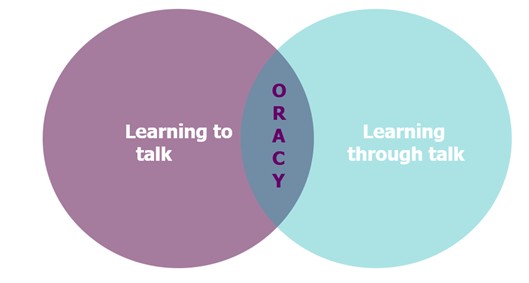
“Learning to Talk” is about teaching children the skills, behaviours, and vocabulary needed to become confident, effective speakers and listeners. It recognises that oracy, like reading or writing, needs to be taught explicitly, not left to chance.
Key features of learning to talk include:
- explicit teaching of oracy skills
- use of the oracy framework
- talk tactics and sentence stems
- modelling and scaffolding
“Learning Through Talk” is about creating opportunities for purposeful, structured talk in lessons so that pupils can deepen understanding, refine their thinking, and develop knowledge collaboratively. Rather than being just a way to share answers, talk becomes a central method of learning.
Key features of learning through talk include:
- talk as a tool for learning – explore new ideas, solve problems, make decisions, reflect on learning and justify/explain their thinking
- structured talk activities – partner talk, group discussions, debates and role play/hot seating
- used across the curriculum – to verbalise mathematical reasoning, debate ethical issues in RE or History, discuss hypothesises in science, explore character motives in English
- assessment for learning – teachers can assess student understanding through talk, noticing misconceptions, depth of reasoning, use of subject-specific vocabulary and clarity and structure of explanations
Key resources for student and parents
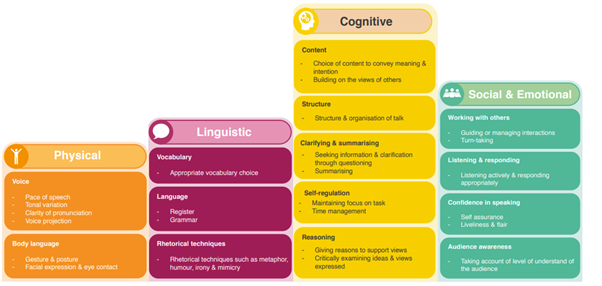
The Oracy Framework
The Oracy Framework supports teachers and students to consider the physical. Linguistic, cognitive and social and emotional skills that enable successful discussion, inspiring speech and effective communication.
Discussion guidelines
To create classrooms that value every voice, it is key to have a shared set of discussion guidelines that all students know, understand and adhere to.
These guidelines:
- promote equity and inclusion
- support the development of oracy skills
- build classroom culture and respect
- develop confidence and independence

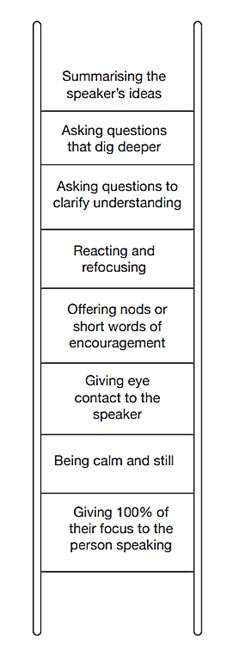
Listening ladder
The Listening Ladder is a tool designed to help students develop their listening and oracy (spoken language) skills in a structured way and is part of the Oracy Framework, which promotes effective communication and talk in the classroom.
The Listening Ladder breaks down listening into progressive steps to show how students can move from basic listening behaviours to more active, engaged, and reflective listening. It supports both teaching and assessment of listening skills, particularly in group work and whole-class discussions.
Student Talk Tactics
These support structured talk in the classroom and ensure every classroom:
- builds a shared language for talk
- supports the development of high-quality talk
- scaffolds participation for all learners
- encourages dialogue through responding to others
- improves confidence and speaking outcomes
- promotes reflective thinking


